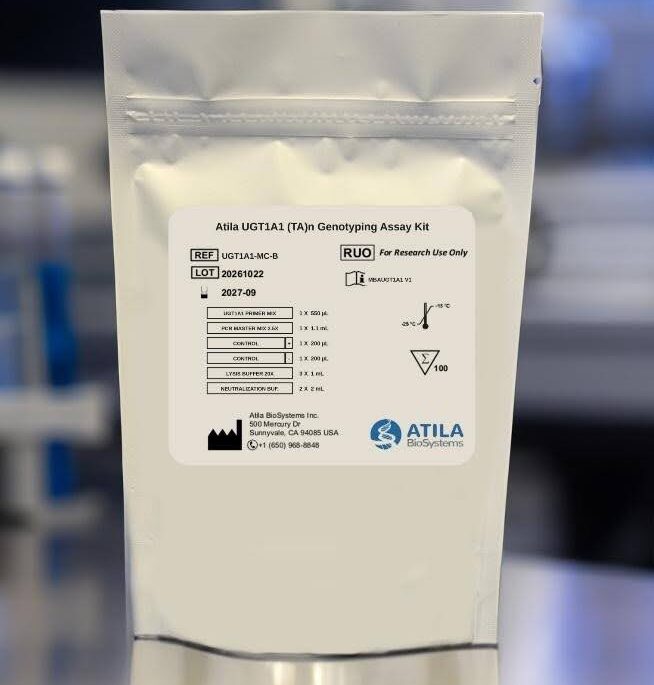
Atila UGT1A1 (TA)n Genotyping Assay Kit
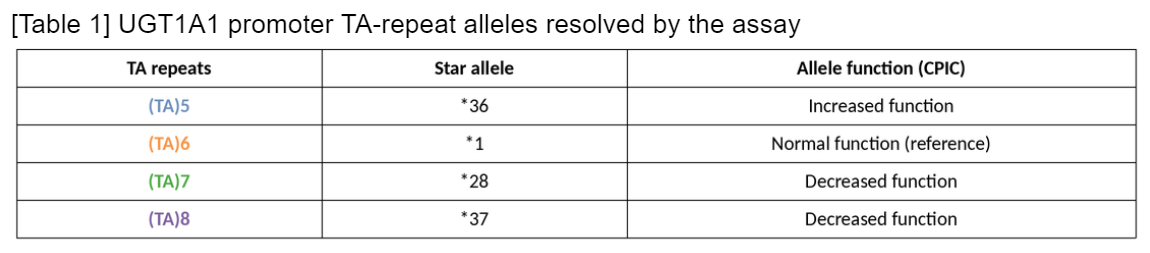
The Atila UGT1A1 (TA)n Genotyping Assay Kit is a PCR melt-curve-based in vitro genotyping assay that determines the number of TA repeats in the UGT1A1 gene promoter (the A(TA)nTAA element). The assay resolves the four common promoter repeat alleles, (TA)5 (*36), (TA)6 (*1, reference), (TA)7 (*28) and (TA)8 (*37), and reports the diplotype in star-allele nomenclature. These promoter variants alter UGT1A1 expression and glucuronidation capacity, which are relevant to bilirubin metabolism and to the response to drugs such as irinotecan and atazanavir. The test is intended for use with purified human genomic DNA (e.g., from blood, buccal swab, saliva, or tissue) or directly with extraction-free lysate prepared from cheek swabs. It is not intended for clinical diagnostic use, patient management, or population screening.
Each kit includes 100 tests.
This product is for research use only (RUO).
Atila UGT1A1 (TA)n Genotyping Assay Kit
UDP-glucuronosyltransferase 1A1 (UGT1A1) is the principal hepatic enzyme that conjugates bilirubin with glucuronic acid, converting it into a water-soluble form for biliary excretion. UGT1A1 also glucuronidates several drugs, most notably SN-38, the active metabolite of the chemotherapy agent irinotecan. The UGT1A1 promoter contains a variable TA dinucleotide repeat within its TATA element, A(TA)nTAA. The reference allele carries six repeats (*1); the seven-repeat (*28) and eight-repeat (*37) alleles reduce transcription and enzyme expression, while the five-repeat allele (*36) increases it. Homozygosity for *28 is the most common genetic basis of Gilbert syndrome, and individuals carrying two decreased-function alleles have reduced clearance of SN-38 and an elevated risk of severe neutropenia and diarrhea with irinotecan. The UGT1A1 genotype is also associated with hyperbilirubinemia during treatment with atazanavir, an inhibitor of UGT1A1. The Clinical Pharmacogenetics Implementation Consortium (CPIC) classifies these alleles by function and assigns normal, intermediate, or poor metabolizer phenotypes from the diplotype, and UGT1A1 is included in the FDA Table of Pharmacogenomic Biomarkers in Drug Labeling for irinotecan. Accurate determination of the promoter TA-repeat genotype therefore supports pharmacogenomic research on bilirubin metabolism and drug response.
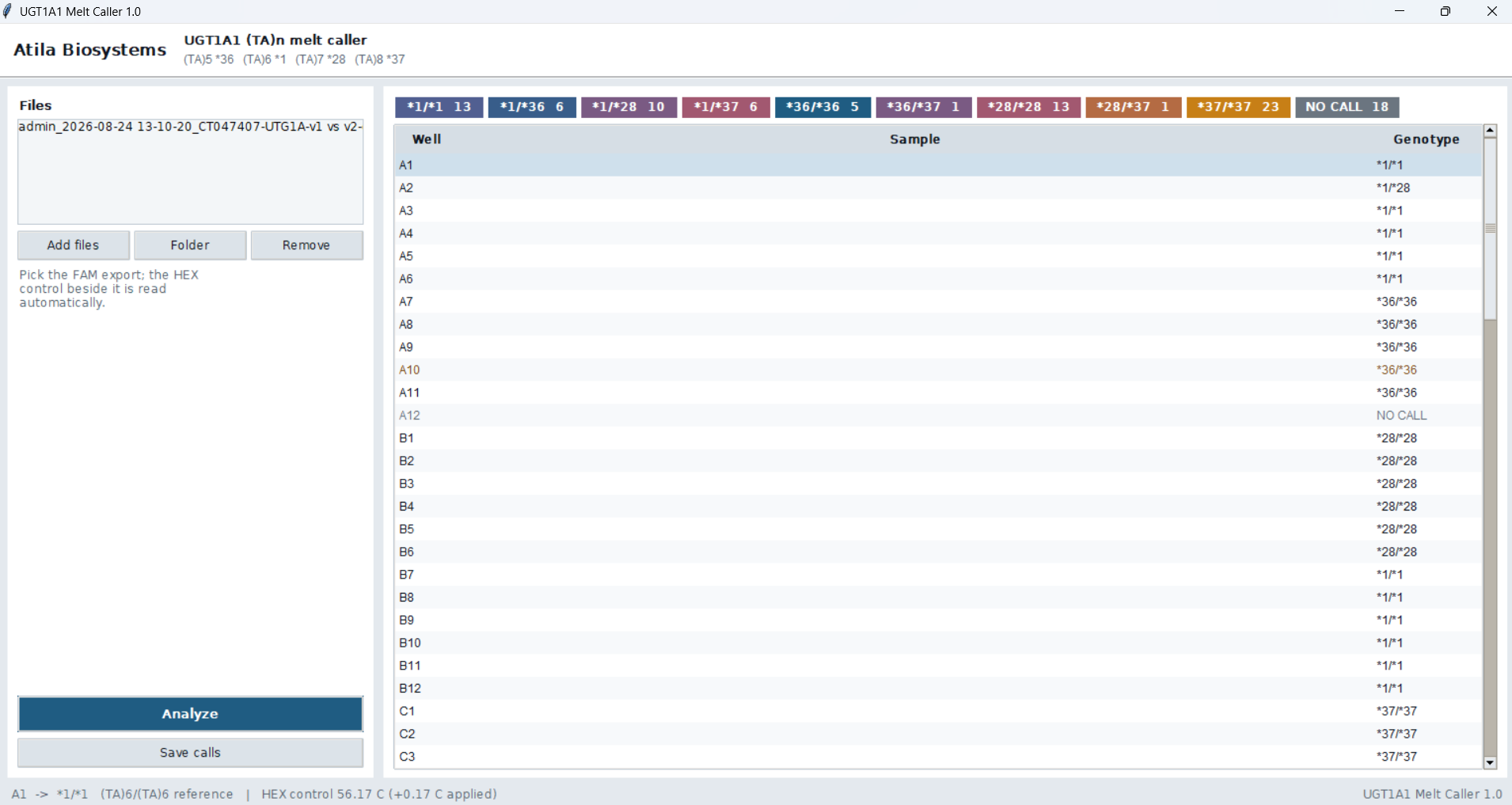
The Atila UGT1A1 (TA)n Genotyping Assay Kit is a single-well real-time PCR assay with melt-curve analysis, based on proprietary technology. Each 25 µL reaction amplifies the UGT1A1 promoter TA-repeat region together with an internal control. After amplification, a melt-curve step is performed, and each TA-repeat allele produces a characteristic melt temperature that increases with repeat number. The internal control generates a melt peak in every well that is used to calibrate that well's temperature scale, so genotype calls are made relative to the well's own control and are robust to well-to-well and run-to-run thermal variation. The included UGT1A1 Melt Caller software reads the Bio-Rad CFX Maestro melt-curve export and automatically reports the diplotype of each well in star-allele nomenclature, flagging wells with weak signal or a failed internal control for review. The assay accepts either purified human genomic DNA or an extraction-free lysate prepared directly from cheek swabs in about 20 minutes, using the Lysis and Neutralization Buffers supplied with the kit.
Features Include
Technical Specs
Workflow Overview for Atila UGT1A1 (TA)n Genotyping Assay Kit
This section is for demonstrative purposes only and may be incomplete or inaccurate. Always refer to the product instructions for precise guidelines and directions.

Sample and reaction mix preparation

Add sample and prepare plate
Run on standard PCR instrument