
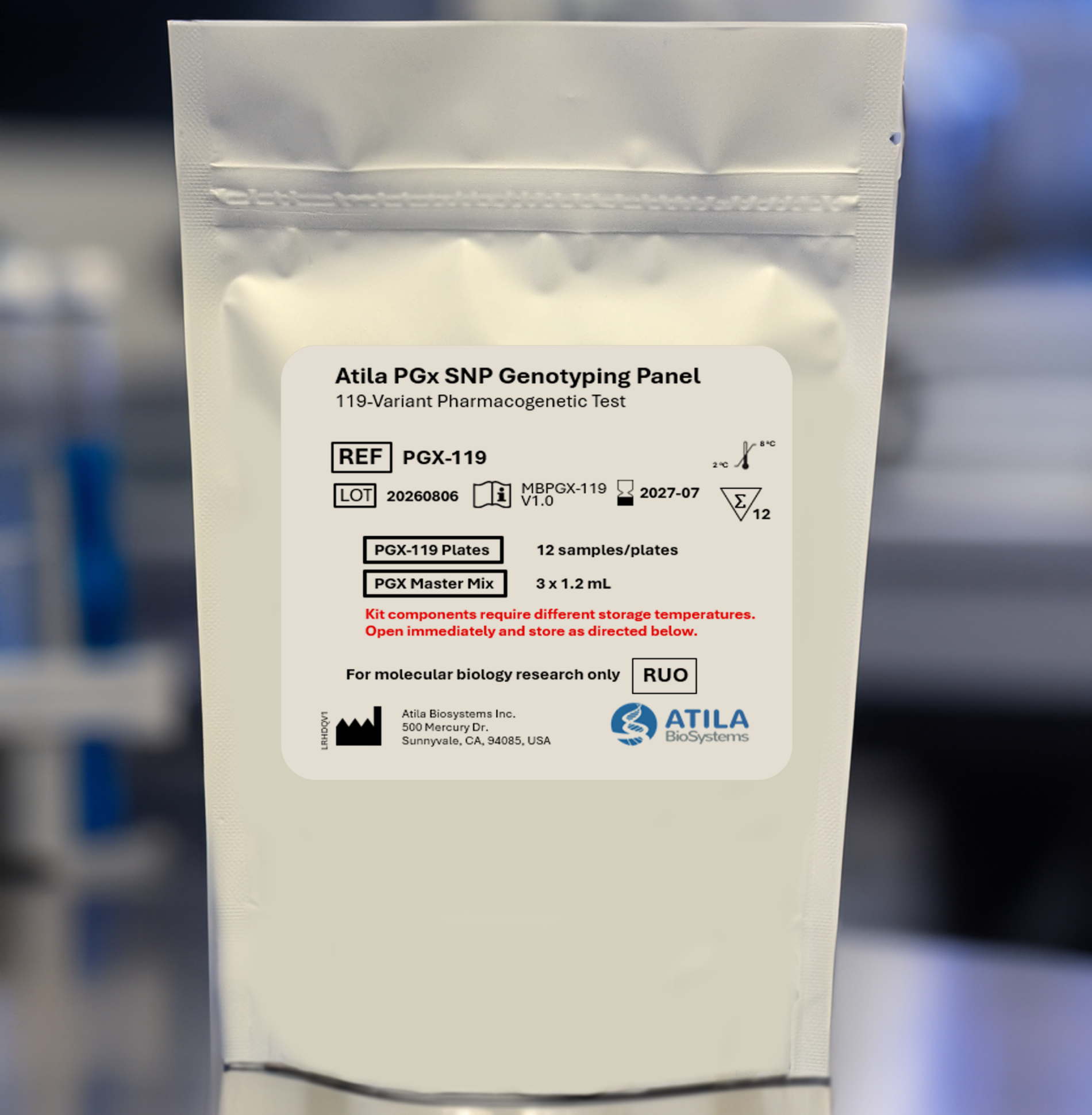
Atila PGx Pain & Opioid Response SNP Panel
Genotyping of 23 pharmacogenomic SNPs across 3 genes governing opioid activation, dose, and analgesic response.
Each kit includes 24 tests. This kit is for Research Use Only (RUO).
Atila PGx Pain & Opioid Response SNP Panel
Opioid analgesia is highly genotype-dependent. CYP2D6 activity determines conversion of codeine, tramadol, hydrocodone, and oxycodone to their active forms (poor metabolizers under-respond; ultrarapid metabolizers risk toxicity — CPIC-guided). OPRM1 (µ-opioid receptor) influences dose requirement, and COMT modulates catecholamine turnover and pain sensitivity. A focused, high-value panel for pain and addiction-medicine research.
Features Include
Technical Specs
Workflow Overview for the Atila PGx Pain & Opioid Response SNP Panel
This section is for demonstrative purposes only and may be incomplete or inaccurate. Always refer to the product instructions for precise guidelines and directions.
Prepare the sample–master mix
For each sample, combine 2 µL of PCR master mix with 1 µL of genomic DNA to make a 3 µL-per-reaction mix. Scale the volume to the number of assay wells required for that sample.
Load the panel plate
Dispense the combined master mix–sample mixture into each assay well of the pre-arrayed panel plate. Seal the plate and briefly centrifuge to collect the reaction at the bottom of each well.
Run real-time PCR
Load the plate onto a Bio-Rad CFX or Applied Biosystems Quant Studio real-time PCR system and run the standard PCR cycling protocol.
Data analysis
Import the run file into the accompanying analysis software for automated allele calling and genotype determination across all panel SNPs.
Obtain result report
The software generates a structured pharmacogenetics report translating each genotype into gene-level phenotype and drug-response context.